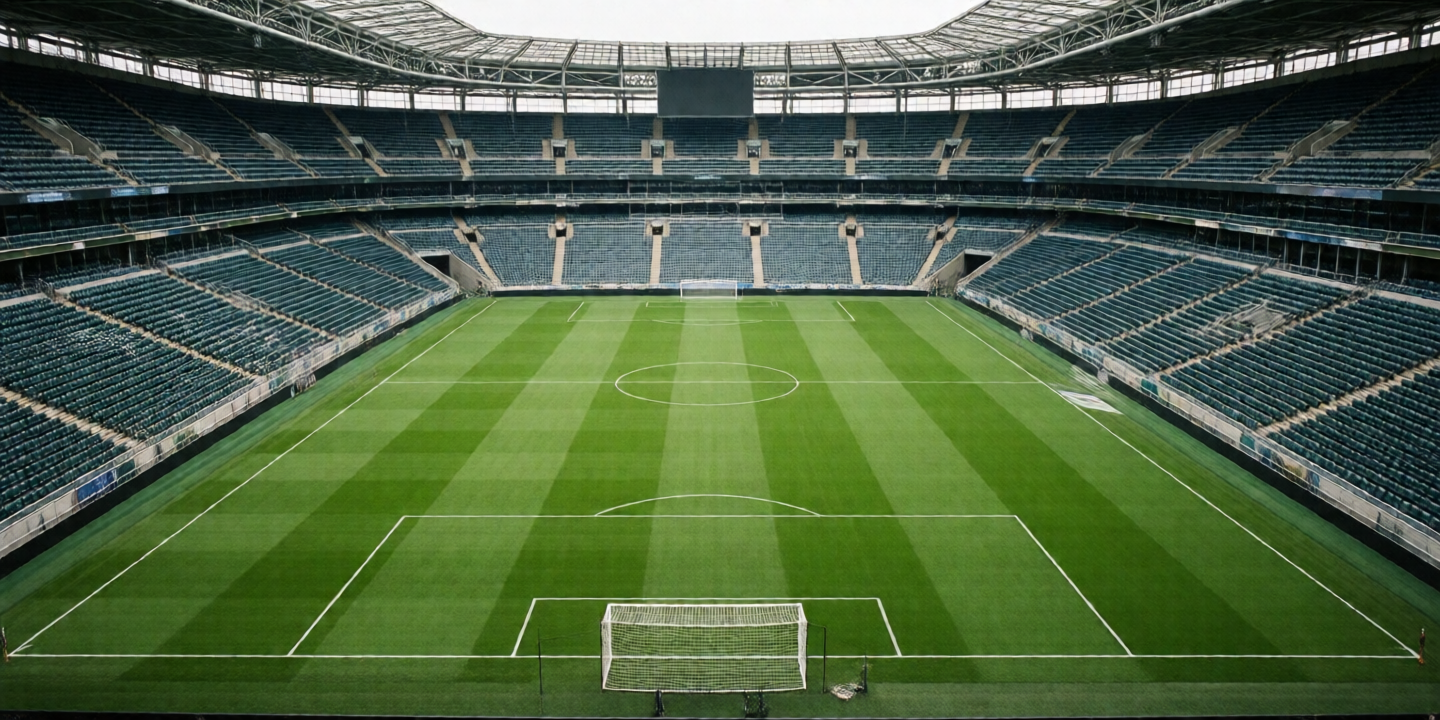
Inside Kansas City's 2026 World Cup: A 6-Match Recap
Kansas City's FIFA World Cup 2026 run is over, and the numbers it leaves behind are tidy: six matches, hundreds of thousands of fans through the FIFA Fan Festival, and one month of tournament programm...
Inside Kansas City's 2026 World Cup: A 6-Match Recap
Kansas City's FIFA World Cup 2026 run is over, and the numbers it leaves behind are tidy: six matches, hundreds of thousands of fans through the FIFA Fan Festival, and one month of tournament programming across the Kansas City region of Missouri and Kansas. Tactical Review treats the stop as a case study in how a 48-team, 104-match World Cup behaves in a mid-sized host city. The takeaways are practical: the six matches spanned group play and knockout rounds, the Fan Festival worked as a second venue, and the host committee now frames its work as legacy rather than event. For followers of the tournament, the useful move is to separate stadium-day atmosphere from tactical signal. Compare match-level stats such as shots, pressing numbers and rest days before trusting any narrative, and log your own turnover and net position as carefully as you log scores.

Before 2025: How Did a World Cup Host City Actually Work?
Before 2025, a host city's job was mostly logistics: secure the stadium, plan transport, and stage a fan zone near the matches. Kansas City followed that template, planning six matches plus a FIFA Fan Festival, while the 48-team, 104-match format spread the tournament across 16 cities in three countries.
Here is the old playbook, in the order organizers actually worked through it, so you can follow the logic. First comes the stadium. A host city needs a venue that clears FIFA's capacity and pitch requirements, then spends years retrofitting it for broadcast, hospitality and security. Then comes movement, meaning airport capacity, shuttle plans and road closures around match days. Finally comes the fan zone, a public space that absorbs the people who could not get into the stadium, which is most of them, honestly. In the 64-match era the whole machine was built around a handful of venues. Qatar 2022 put all eight of its stadiums inside one compact area, so the host could treat the tournament as a single dense event. A continental tournament never works that way. Kansas City was building for a world where teams and supporters arrive for a few days and then vanish toward the next hub. If you only ever checked the scoreline, you missed the whole logistics story, no offense, but the scoreline was never the whole product.
The arithmetic is where it gets fun, if you're into that sort of thing (I am, obviously). According to the Wikipedia entry on the 2026 FIFA World Cup, the tournament runs 104 matches across 16 host cities. That averages 6.5 matches per city, so Kansas City's six sat just under the mean. The 2022 format averaged eight matches per stadium. Total matches rose by 62.5 percent, yet matches per venue fell by roughly 19 percent. That is the first thing most recaps skip. A venue now produces a thinner sample, so any claim that a team "loves" a particular stadium or climate rests on one or two games, which is noise rather than a trend. For deeper background on how groups were built, see our 2026 World Cup group-stage tactical breakdowns.
The 2026 Shift: What Did Kansas City Do Differently?
Kansas City treated the World Cup as a month-long public event rather than six isolated match days. It staged a FIFA Fan Festival that drew hundreds of thousands of fans, published six Match Day photo galleries, and now frames the outcome as legacy, with its own site saying its impact "is only beginning."
The region's own summary reads: "Six matches. Hundreds of thousands of fans. One region united to welcome the world." That is Kansas City's official host-city site talking, so read it as marketing, but the structure is worth noticing. The Fan Festival sat at the center of the story, billed as "the heart of the game," and the stadium was treated as one chapter of a longer narrative. Per the published schedule, the six matches covered four group-stage games, a Round of 32 tie and a quarter-final, so the city saw the tournament change character between its first and last fixture. Group games are about managing risk across three outings, while knockouts are about surviving ninety minutes or more, and the same venue hosted both moods.
Now the part nobody puts in the press release. "Hundreds of thousands" is a cumulative figure for visits across the festival's run, and I have not seen an official unique-visitor split. Treat it as footfall, not as people. That matters if you are tempted to compare it with stadium capacity, because a festival visitor who returned on five days counts five times. The Fan Festival is a brilliant demand signal, but it is a poor proxy for how many people were actually in the stands. Anyone using festival numbers to argue about "interest in the match" is comparing apples to a very large fruit basket, you know?

What Changed for Players and Fans?
For players on the pitch, the main change was scale: more teams, more mismatches, and a longer road to the final. For fans and bettors, the change was information: more matches meant thinner samples, so tracking rest days, travel and matchup shape beat chasing venue narratives.
The format itself did the heavy lifting. Twelve groups of four feed a 32-team knockout stage, which means the top two in each group advance along with the eight best third-placed sides. A finalist can play up to eight matches, one more than the seven of the old format. That extra round changes how coaches rotate and how third-placed teams calculate goal difference. Here is the order I use when I sit down with the fixture list:
- First, check the rest-day gap between each team's matches. A three-day turnaround and a five-day turnaround are not the same match, whatever the preview says.
- Then, map travel between host cities. A short hop to Kansas City and a cross-continent flight leave different legs on the pitch.
- Finally, run the third-place math. With eight third-placed teams advancing, goal difference in a dead group game can matter more than the result.
I know, I know, you wanted a hot tip on a striker. Honestly, your striker is a 90-minute average over a tiny sample, and the rest-day column wins more arguments than his highlight reel. If you track your own turnover, rebates and net position the way I do, treat these three columns as inputs and not as gospel. Our player stats explained guide shows which per-90 numbers hold up over eight games and which ones look good only because the sample is small.
What Does This Mean Now?
It means the tournament is a finished data set and the useful work starts now. Kansas City's six matches are in the books, the Fan Festival is archived in galleries, and Tactical Review readers can mine match data for patterns that carry into club seasons and 2030 qualifying.
Start with the contrarian conclusion, because it is the one that saves you money. A team plays at most eight matches in this tournament, and most play far fewer. That is a single short season, and one that was played across different cities, altitudes and kickoff windows. So a tactical trend, say a high press that produced early goals, is a hypothesis and not a verdict. Before you let it move your view of a team, ask whether it survived against a second and third opponent of different quality. If it only worked against the weakest side in the group, that is the format flattering the system, not the system beating the format. At Tactical Review we keep a simple rule: no trend graduates to a conclusion until it shows up in at least three separate matches.
Then look at what Kansas City says it plans to do next. The host site says that while the city's role has "come to a close," its impact "is only beginning." Cities that host big events usually follow with legacy reports, youth-football programs and venue reuse announcements. Those documents are public, they are slow, and they are a better guide to what happens next than the match-day hype. For a wider view of the tournament itself, FIFA's official tournament page remains the primary source for fixtures and results.

Three Predictions for Next Quarter
These are predictions, not facts, and I would rather be wrong in public than vague in private. Over the October to December 2026 quarter, I expect three things to play out, and you can hold me to each one:
- Host-city legacy reporting will outrun match analysis. Expect Kansas City and its peer cities to publish economic and community impact summaries, and expect them to lead with the biggest crowd numbers.
- Tournament narratives will fade from club-football pricing faster than fans expect. Domestic leagues restart their own rhythms, and a player's eight-match World Cup form tends to be priced in for a few weeks, then overwritten by club minutes.
- The 48-team format will be judged on its group stage. Early 2030 qualifying talk will focus on whether the extra Round of 32 produced better knockout football or simply more matches.
If you take only one thing from this recap, take the habit and not the prediction: write down your assumptions before the data arrives, then check them afterwards. That is what the rational part of me does with every fixture, and it is the same discipline whether you are following a six-match host city or a whole tournament. The Kansas City story is a good reminder that a big event is mostly a lot of small, measurable decisions, from stadium retrofits to rest days. Anyone who tells you the whole tournament boiled down to one dramatic night is selling a story. For the next batch of previews, check our knockout-round preview hub and our match prediction methodology page. And please, if you gamble, set a limit before kickoff, not after the second half collapse. Bet only what you can afford to lose.
Frequently Asked Questions
Q: What is the 2026 World Cup football tournament?
A: It is the 23rd FIFA World Cup, hosted jointly by the United States, Canada and Mexico. It is the first to feature 48 teams, playing 104 matches across 16 host cities. Kansas City was one of the US host cities and staged six of those matches, plus a FIFA Fan Festival.
Q: How many matches did Kansas City host?
A: Kansas City hosted six matches during the tournament. Per the published schedule, they covered four group-stage games, one Round of 32 tie and one quarter-final. That is just under the 6.5-match average you get from dividing 104 matches by 16 host cities, so the region carried a normal share of the tournament.
Q: How does the 48-team format change how I should read results?
A: It makes each result less informative on its own. Twelve groups of four feed a 32-team knockout bracket, and the eight best third-placed teams advance, so goal difference and rest days matter earlier. Because a finalist plays up to eight matches, wait for a pattern across at least three games before calling it a trend.
Q: Is the Fan Festival attendance figure the same as stadium attendance?
A: No, the two are not comparable. "Hundreds of thousands of fans" at FIFA Fan Festival Kansas City is a cumulative figure over many days, so repeat visitors are counted repeatedly. Stadium attendance is capped by seats per match, so compare the festival number to total footfall, not to a single crowd.
Q: Why do venue-specific narratives often fail in 2026?
A: They fail because samples are tiny. With about 6.5 matches per host city, a team may play only one or two games at a venue, which is not enough to separate "venue effect" from opponent quality. Use rest days, travel distance and matchup style as your main variables, and treat venue stories as color.
Q: Does following World Cup coverage cost anything?
A: Official match information from FIFA and host-city sites is free, and Tactical Review's tournament coverage is free to read. The real cost is time and discipline: if you place wagers, set a loss limit before kickoff, track turnover and net position in a simple spreadsheet, and walk away once the limit is hit.