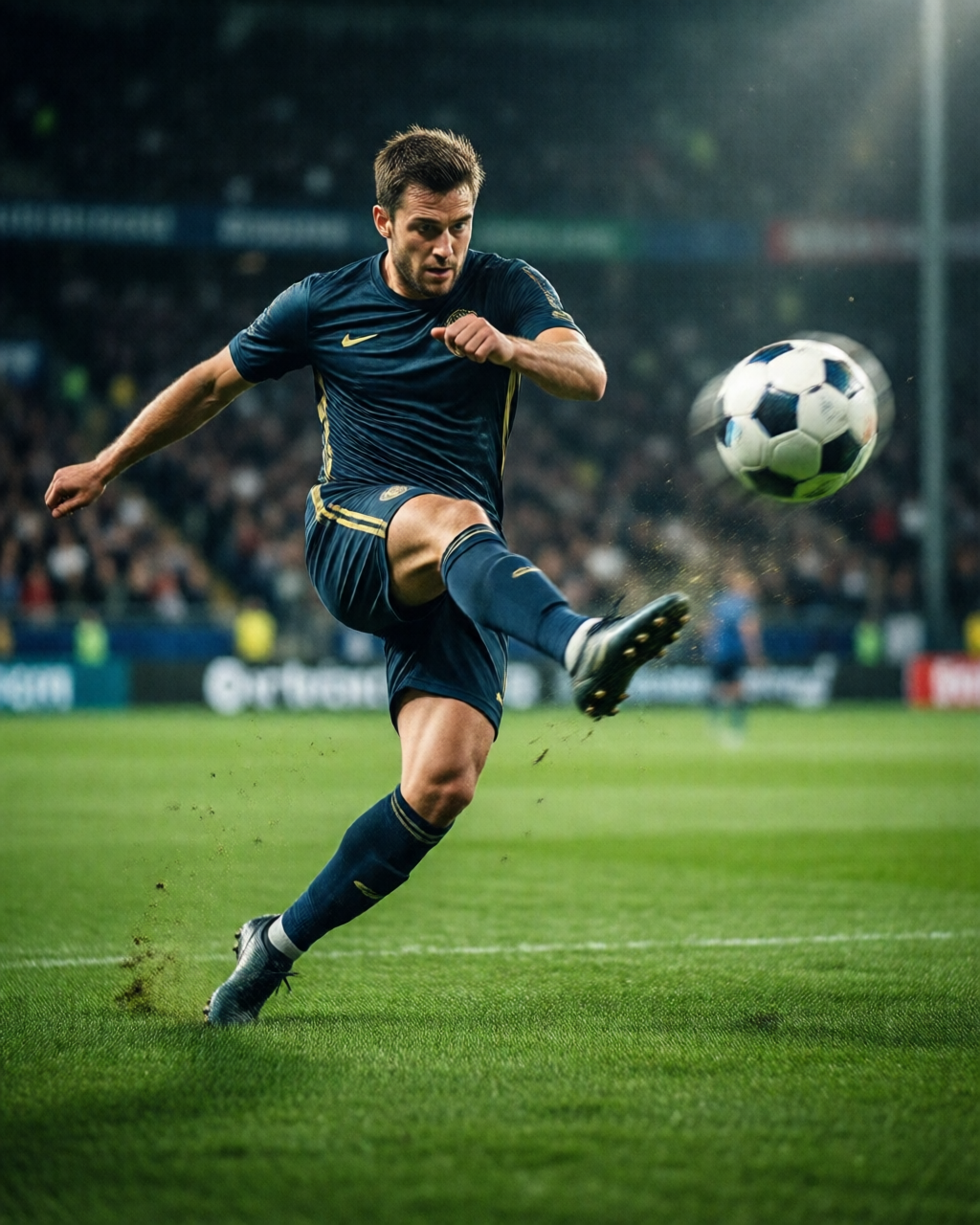
Star Power vs Group Math: Winning World Cup Football 2026
The 2026 FIFA World Cup, hosted jointly by the United States, Canada and Mexico from June 11 to July 19, 2026, is the first men's World Cup with 48 teams and 104 matches, and that expansion changes ho...
Star Power vs Group Math: Winning World Cup Football 2026
The 2026 FIFA World Cup, hosted jointly by the United States, Canada and Mexico from June 11 to July 19, 2026, is the first men's World Cup with 48 teams and 104 matches, and that expansion changes how smart fans read the tournament more than any single star player does. Twelve groups of four send the top two teams plus the eight best third-placed sides into a new round of 32, so a single win can keep a team alive. Favorites are also less safe than their reputation suggests: four of the six defending champions from 2002 to 2022 went out in the group stage. At Tactical Review we weigh goal difference, rest days and venue altitude, since Mexico City sits roughly 2,240 metres above sea level, before we weigh any reputation. The practical takeaway: judge teams by underlying numbers, and fix your stake limit before each matchday, not after the first goal.

Here's the thing about every World Cup preview you've read: they're about shirts. Brazil's yellow, Argentina's stripes, France's depth chart, all very pretty, none of it a number. I'm the guy with the spreadsheet tracking turnover, rebates and net position, so I read the sport backwards, numbers first and feelings later (sorry, not sorry). This guide works in three passes. First, we strip the new 48-team format down to what changes arithmetic. Then we take three popular beliefs and put them on the scale, one debunked, one partially true, one flat-out false. Finally we land on a short list of habits that survive contact with a real tournament. Along the way you'll see where the old FIFA World Cup record book still helps and where it quietly lies to you, because 22 completed tournaments through 2022 is a decent sample, just not a sample of this format. If you've ever backed a famous name purely because it was famous, this is your friendly roast. You know who you are...
How does the 48-team World Cup format actually work?
The 2026 World Cup has 12 groups of four teams. The top two from each group and the eight best third-placed teams advance to a round of 32. Knockout rounds then run to the July 19 final at MetLife Stadium. The tournament totals 104 matches across 16 host cities.
Previously, 32 teams played 64 matches, with 16 advancing from eight groups. Now the group stage is 72 matches, and the knockout phase is 32 matches including the third-place playoff. The sneaky number is eight: any team that reaches the final now plays eight matches instead of seven, which makes squad depth and rotation more valuable than in Qatar 2022. Hosting is split too. Eleven cities are in the United States, three in Mexico, and two in Canada, with Mexico City's Estadio Azteca opening the event. For the official structure, FIFA's tournament hub is the source to trust, and the 2026 FIFA World Cup page tracks the venue list. Quick reference of what changed:
- Teams: 48 instead of 32.
- Matches: 104 instead of 64.
- Knockout entry: round of 32, new this edition.
- Matches for a finalist: 8 instead of 7.
- Host nations: three, a first for the men's event.
Myth 1: "Favorites are safe in the group stage" — debunked
This is false. Four of the six defending champions between 2002 and 2022 were eliminated in the group stage: France in 2002, Italy in 2010, Spain in 2014 and Germany in 2018. Reputation protects nobody across three matches, and one bad ninety minutes is all it takes.
The sharper example came in 2022, when Saudi Arabia beat Argentina 2-1 at Lusail Stadium. Argentina still won the whole tournament, which is the funny part: the upset lost the favorite a single match, not the trophy. Germany, meanwhile, went out in the group stage again in Qatar, making it two straight early exits for a four-time champion. So the lesson is not "favorites collapse." It's that the group stage punishes teams that treat matchday one as a warm-up. Under the 48-team format, the cushion is bigger, since one win can be enough to advance as a good third-placed team, so the old panic of a single lost game is smaller. My contrarian read: the new format makes elimination of giants in the groups slightly rarer but makes finishing first matter more, because first place buys a softer round of 32 path. Pricing "to win the group" is therefore a different question from "to advance," and treating them as the same bet is how people light money on fire, tbh.

How do third-place tables decide a group?
Eight of the twelve third-placed teams advance, ranked by points, then goal difference, then goals scored. That is two in three, the same ratio as the 24-team European Championship, where four of six thirds went through. Four points has historically been the comfortable line.
Here's the operational detail most previews skip. Within a group, the final two matches kick off together, but the 12 groups cannot all finish at once. That means teams in later groups know exactly what number the third-place table demands, while earlier groups are guessing. A side needing a two-goal win against a tired opponent plays a different match than a side that only needs a draw, and you can often see the effect in the first 20 minutes. If you follow World Cup football with a notebook, copy the table after each group closes and mark the cut line. Three points is the lottery number: from the Euro 2016 and Euro 2020 patterns, thirds on three points went through or fell out on goal difference. Four points, by contrast, was rarely at risk. Treat that as a working heuristic rather than a law, because 48 teams adds weaker sides to the pool, which could lift the average third-placed team's points slightly. For deeper breakdowns, see our how third-place qualification scenarios work.
Myth 2: "Host nations get a huge advantage" — partially true
It's partially true. Six hosts have won the World Cup: Uruguay in 1930, Italy in 1934, England in 1966, West Germany in 1974, Argentina in 1978 and France in 1998. But the modern record is mixed, and the effect has faded as travel and preparation became more equal.
Six titles from 22 tournaments is a real signal, roughly 27 percent for a country that is one entry in a field of 16 to 32. That is far above a naive base rate. Yet South Africa became the first host to fail to leave the group stage in 2010, and Qatar lost all three group matches in 2022, which hadn't happened to a host before. So the honest summary: hosts get familiarity, crowds and no jet lag, but they also carry pressure that a tactical plan cannot absorb. In 2026 the picture gets muddier because three countries share hosting duties, and each plays group matches in its home country, so the fan effect is real but distributed. The United States, Mexico and Canada face different crowds, climates and altitudes. If you'd like to compare, our host nation record across all World Cups page lays it out edition by edition. My rule: give hosts a small bump in the group stage, then drop it completely once the bracket gets tight, because knockouts are decided by quality, not postcodes.
Why does Mexico City altitude and travel matter for tactics?
Mexico City's Estadio Azteca stands about 2,240 metres above sea level, where thinner air reduces aerobic output and changes how the ball travels. Teams not acclimatized tend to lose intensity after roughly the 60th minute. Travel across three time zones adds further fatigue across the group stage.
This is where numbers-first thinking pays rather than hurts. Pressing teams burn their legs fastest at altitude, so high-line sides usually shift toward compact mid-blocks there and accept less possession. Substitution patterns matter too: with five changes allowed, benches built for athletic wingers become an asset for the final half hour. Distance is the other hidden cost, since the continent is huge and groups are spread across regions. A team that flies from Vancouver to Miami or Mexico City to Toronto between matches loses recovery hours that a rest-day count alone doesn't show. Mexico, notably, has played at Azteca for decades, and the stadium also hosted the 1970 and 1986 finals. When you read a match preview, check three things before the lineup: kickoff local time, the previous venue and the number of rest days. Those three facts often explain a flat second half better than any tactical diagram.

Myth 3: "More teams means more chaos and upsets" — flat-out false
This is flat-out false. Adding 16 teams mostly adds mismatches, not upsets. Qatar 2022 averaged 2.69 goals per match (172 goals in 64 games), and the extra sides come from the lowest-ranked qualifying slots, so expect more lopsided scores and fewer shocks among the top teams.
Think about the draw structure. Each group still has one top-seeded team, and the new fourth entrants are the weakest in the pool. That raises the odds of a heavy win for a strong team on matchday one, which is a bigger goal-difference swing than a 1-0 grind. Goal difference then becomes the tiebreaker that sorts the third-place table, so running up the score against a minnow is not bad manners, it's strategy. The truly chaotic moments historically come in knockout single matches, where penalties turn a 3-3 final into a 4-2 shootout, as Argentina over France in 2022. More teams does not change that. So the people predicting a "wild" 48-team tournament are mixing up volume with variance. More matches means more noise in individual results, but the underlying quality gap between a top-ten side and a debutant is exactly what it was. Don't chase upsets just because the field is bigger; price them like they were before and ask whether the odds still pay.
What did Qatar 2022 teach us about scoring and penalties?
Qatar 2022 produced 172 goals in 64 matches, an average of 2.69 per game, and its final was decided by penalties after a 3-3 draw. Kylian Mbappé won the Golden Boot with eight goals. The tournament shows that late goals and shootouts, not group-stage averages, shape the knockout bracket.
Use that as a baseline, not a prediction. The 1998 expansion to 32 teams also produced about 2.67 goals per match, so scoring did not jump when the field grew then, and I don't expect a jump now. What changes is the distribution: more matches between mismatched sides push the average up on paper while hiding the same tight knockouts underneath. Argentina's final against France ended 3-3 after extra time, and the shootout finished 4-2, which is a reminder that penalty outcomes are close to coin flips and should never carry heavy conviction in a model. Also notable: Morocco became the first African semifinalist in 2022, which tells you that organized defenses can beat reputation. Our World Cup scoring trends by decade article tracks the averages across editions if you want to test this yourself.
What actually works
What works is boring on purpose: track goal difference, rest days, venue conditions and squad depth, and compare them against the price you are offered. These four inputs explain more World Cup football outcomes than star names do, and they are free to check.
Let me be concrete, because "do your research" is advice from people who never did any. First, goal difference. In a 48-team group stage it is the currency of the third-place table, so a team's attacking efficiency against weak opponents has real value. Second, rest days: a gap of two days versus five between matches changes pressing output measurably late in games. Third, depth: with eight matches possible for finalists, a squad whose 12th to 20th players are weak will fade by the quarterfinals. Fourth, set pieces, which decide a large share of tight knockout matches and don't depend on form. A simple weekly routine:
- Update the group and third-place tables after every matchday.
- Note kickoff time, venue altitude and days since the last match.
- Compare your estimate to the market price and skip any match where you see no edge.
- Record every stake and result so you can read your own net position afterward.
Honestly, number four is the one nobody does, and it's the one that tells you whether you're an analyst or just a fan with a betting app.
How should you manage a World Cup budget?
Set a fixed tournament budget before the opening match, split it into equal daily units, and never raise stakes to recover a loss. For a 39-day, 104-match event, a flat unit of one to two percent of the budget keeps a bad week survivable.
Math time. If your total budget is 1,000 units, a two-percent unit is 20, which means even ten straight losses cost you about 18 percent rather than your whole pot. The format helps here: 72 group matches over 17 days means a flood of options, and the temptation is to bet everything because something is always on. Don't. Choose a small number of matches per day where you have a genuine reason, and pass on the rest. Remember that betting involves real risk, that outcomes are never guaranteed, and that you should only play within legal limits where you live and only with money you can afford to lose. If it stops being fun, step away and use the self-exclusion and limit tools that licensed operators provide. Tactical Review treats that as part of the analysis, not a footer disclaimer: a bankroll plan is a risk model for the one variable you fully control, which is you.
What to ignore
Ignore star-player narratives, "golden generation" labels, pundit confidence, and anything that treats a friendly result as proof. None of these have a track record of predicting tournament outcomes better than structure, schedule and squad depth do.
Let me be a bit mean here, since that's the deal. Star narratives are marketing: Brazil has five titles, but the last arrived in 2002, and the badge doesn't score. "Golden generation" talk has been attached to teams that left tournaments early, again and again. Warm-up friendlies are tuned for rotation and injury avoidance, so a 4-0 win in March says little about July. Pundit certainty is the loudest and least accountable signal on the internet; nobody checks their record afterward. Social media "locks" are worse. Also skip the anchoring trap of past head-to-head results from other competitions, since squads change by around a third between cycles. And ignore the urge to bet the first goal in a match you haven't analyzed. The practical filter is simple: if a claim can't be turned into a number you can check, it's entertainment, not analysis. Enjoy it as entertainment, then close the tab. For more on separating signal from noise, read our beginner's guide to World Cup stats.
How do you follow World Cup football like a data nerd without losing your mind?
Pick three metrics, check them at fixed times, and write down every decision. A data-driven viewer tracks goal difference, rest days and expected goals, reviews them once per matchday, and ignores live noise. This keeps the process repeatable and the stakes controlled.
Here is the guide-style routine promised earlier, in order. First, before the tournament week, build a one-page sheet listing each group's schedule, venues, altitude and rest gaps. Then, on each matchday morning, update it with injuries and expected lineups, and pick at most two or three matches where your numbers disagree with the market. During play, watch rather than react, because live odds swing on single events that rarely change underlying quality. Finally, after the final whistle, log what you expected, what happened, and why you were right or wrong. That last step is where improvement comes from, and it costs five minutes. Over the 2026 World Cup football schedule, that adds up to a personal dataset larger than most casual fans will ever build. So here's the conclusion, minus the hype: group math beats star power more often than not, the format rewards depth and discipline, and the best habit is a small, boring, well-documented process. Tactical Review will keep publishing the numbers behind every matchday so you can check our work, and yours.

Frequently Asked Questions
Q: What is the 2026 World Cup format?
A: It is a 48-team tournament with 12 groups of four and a new round of 32. The top two in each group plus the eight best third-placed teams advance. The event runs from June 11 to July 19, 2026, across 16 cities in the United States, Canada and Mexico, with 104 matches in total. A finalist plays eight matches instead of the previous seven.
Q: How do I read a World Cup group table in the new format?
A: Check points first, then goal difference, then goals scored, and watch the third-place table separately. Eight of the twelve third-placed teams advance, so four points is usually comfortable while three points often comes down to goal difference. After each matchday, copy the table and mark the cut line so you can see exactly what each team still needs.
Q: Is it better to back favorites or underdogs at the World Cup?
A: Neither wins consistently; value depends on the price, not the label. Favorites reach the knockouts more often, but short odds already reflect that, and four of six defending champions from 2002 to 2022 exited in the group stage. Compare your own estimate with the odds and skip matches where there is no gap. Gambling carries risk, so stake only what you can afford to lose.
Q: Why do penalty shootouts matter so much in World Cup football?
A: They decide a large share of tight knockout matches and are close to a coin flip. Argentina beat France 4-2 on penalties after a 3-3 final in 2022. Because skill edges in shootouts are small, avoid putting heavy confidence on them, and treat any match that reaches extra time as high variance rather than a read on team quality.
Q: How much should I budget for World Cup betting?
A: Set a fixed total you can comfortably lose and divide it into small flat units. A unit of one to two percent of the budget keeps a losing streak survivable over a 39-day tournament. Never increase stakes to chase losses, and use the deposit limits and self-exclusion tools offered by licensed operators if the habit starts to feel stressful.
Q: Why do big teams still go out in the group stage?
A: Three matches are a tiny sample, and one poor result can sink a campaign. France in 2002, Italy in 2010, Spain in 2014 and Germany in 2018 all left early as defending champions. Opening-match nerves, injuries, tactical mismatches and tiebreakers on goal difference all contribute. The 48-team format softens this slightly, since one win can be enough to advance as a strong third-placed side.
Q: What should I check before each World Cup match?
A: Check kickoff local time, the previous venue, rest days and altitude before reading the lineup. Mexico City sits around 2,240 metres up, and cross-country travel eats recovery time, so a team's second half can fade for reasons unrelated to tactics. Add confirmed injuries and set-piece strength, and you will have a more reliable picture than any pundit preview gives.