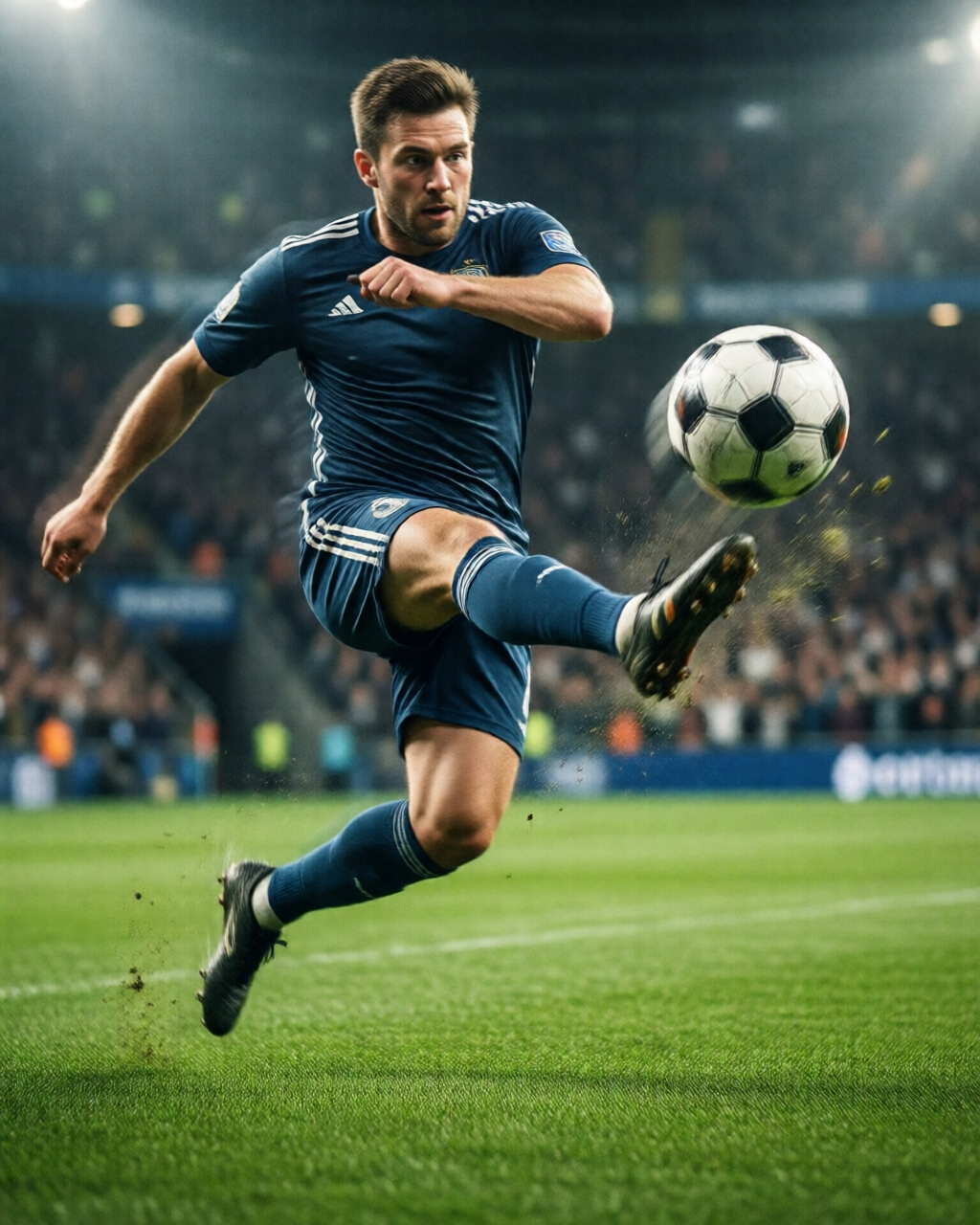
Top 5 World Cup 2026 Favorites vs Dark Horses: Value
Spain is our number one pick for the 2026 FIFA World Cup, ahead of Argentina and France, because the Euro 2024 champions pair the deepest midfield in the field with the cleanest route through a new 48...
Top 5 World Cup 2026 Favorites vs Dark Horses: Value
Spain is our number one pick for the 2026 FIFA World Cup, ahead of Argentina and France, because the Euro 2024 champions pair the deepest midfield in the field with the cleanest route through a new 48-team format. Tactical Review ranked five contenders across squad depth, tournament pedigree, group difficulty, and price, then compared them with four dark horses. The tournament runs June 11 to July 19, 2026, across 16 host cities in the United States, Canada and Mexico, with 104 matches instead of 64 and a new round of 32. That extra knockout round means a champion now plays eight matches, not seven, which punishes thin squads and rewards rotation. Favorites rarely look as cheap as their reputation suggests once the bookmaker margin is stripped out. Before you back anyone, convert the quoted odds into implied probability, subtract the overround, and only bet when your own estimate beats the corrected number.

Here's the thing about tournament previews, honestly... most of them are just a list of famous names with a vibe attached. We do spreadsheets instead, because feelings don't pay out. Tactical Review follows turnover, margins and net position the way some people follow their ex's social media, so the ranking below is built from numbers first and opinions second. Read it in order: first the quick list, then the three detailed picks, then the method, and finally a decision guide for choosing between them.
The Top 5 at a Glance
The ranking at a glance, best overall first. Every pick gets one line of justification, and the dark horses come later so the favorites don't hog the whole page.
- Spain: best overall. Euro 2024 champions with the deepest midfield and the most balanced squad age profile.
- Argentina: best for tournament pedigree. 2022 winners with a proven knockout temperament, though the core is aging.
- France: best value. The 2022 finalists always have the most explosive attack, and the market sometimes prices them below Spain for no strong reason.
- England: best for squad quality on paper. Harry Kane leads a talented group, but the knockout record keeps the price honest.
- Brazil: best for upside. Five-time champions with elite attacking talent and the most volatile defensive record of the five.
The full schedule and live results sit on the ESPN FIFA World Cup schedule if you want to cross-check fixtures while you read.
#1 Spain: Best Overall
Spain tops the list because it is the only contender that scores well on every criterion at once. The side that beat England 2-1 in the Euro 2024 final in Berlin won all seven of its matches in that tournament, and the core has barely aged out of its prime. Rodri, the 2024 Ballon d'Or winner, anchors the midfield, while Lamine Yamal and Nico Williams stretch defenses on both wings. Possession football is also the best insurance against the new format's longer schedule, since a team that controls the ball spends less energy chasing it. Across a campaign that now needs eight wins, that matters more than people admit.
The practitioner angle is rotation. With 48 teams, a favorite can afford to rest key players in a third group match once qualification is safe, and Spain's bench is the one most likely to hold its level when that happens. Our read is that Spain's group-stage matches will look boring, and boring is exactly what you want from a favorite. The catch, because there's always a catch, is price. A short-priced favorite carries bookmaker margin on top of a probability that is realistically in the high teens, so backing Spain at the front of the market is a fair bet, not a cheap one.

#2 Argentina: Best for Tournament Pedigree
Argentina earns second place because tournament football rewards composure, and nobody has more of it. Lionel Messi's side won the 2022 final in Qatar on penalties after a 3-3 draw with France, and it followed that with the 2024 Copa America. Messi turns 39 on June 24, 2026, so he is 38 when the tournament starts, and the real question is minutes management, not reputation. Julian Alvarez, Lautaro Martinez and Enzo Fernandez give the squad enough quality that a reduced Messi role would not collapse the system.
Now the contrarian bit. Defending champions have a poor repeat record, and the market sometimes overcorrects by discounting them too heavily or too lightly, depending on how recent the headlines are. We would not back Argentina at the front of the market for outright value, but we would watch their match-by-match prices. A narrow opening loss costs far less in a 48-team field, which means Argentina's group-stage risk is lower than the old format implied. That is the sort of edge people skip when they just stare at the outright number.
#3 France: Best Value
France takes third place because attacking talent per euro of odds is hard to beat. Kylian Mbappe leads a squad that reached back-to-back finals in 2018 and 2022, winning the first and losing the second on penalties. Real Madrid, Bayern Munich and Paris Saint-Germain supply most of the core, so the players arrive fit and familiar with elite pressure. A France team that is merely good still has a path to the semi-finals in most scenarios we modelled.
Value is the whole argument here. When two teams have similar true win probabilities, the one the public likes less usually carries the better price, and France often sits slightly behind Spain and England in popularity despite a stronger recent record. We would still not call them cheap in absolute terms, because no favorite is, but relative value matters when you are choosing between three similar-quality horses. The risk is internal: France's squad can be inconsistent in matches where they dominate possession but lack a creative center. If you like France, wait for the squad news and the group draw's implications before committing, since the price drifts on injuries more than on form.
What Does the 48-Team Format Change for Favorites?
The 48-team format gives favorites more safety in the group stage and more work in the knockouts. Twelve groups of four send the top two plus the eight best third-placed teams into a new round of 32, so 32 of 48 teams advance, or about 67 percent, versus 50 percent before.
Two consequences follow. First, a single bad group result is survivable, so the price of a favorite going out early should be longer than history suggests. Second, a champion plays eight matches, so squad depth is worth more than before. The operational tip most previews skip: third-placed teams are ranked across groups, and goal difference is a tiebreaker, so a late goal in a lopsided match can decide whether a team goes through. Favorites that keep attacking at 4-0 are not being greedy, they are protecting their own qualification margin.
Read the official structure on the Wikipedia 2026 FIFA World Cup page or FIFA's tournament site. For a deeper look at how the new bracket plays out, see our round of 32 bracket explained.
Where Do Dark Horses Hide in a 48-Team Field?
Dark horses hide in the middle tier: Morocco, Colombia, Japan and the host United States. Morocco reached the 2022 semi-finals, Colombia has a strong attacking core, Japan has beaten several European giants recently, and the hosts have a home-continent advantage worth modelling.
The extra qualification slots lift all of them, because a team that finishes third in its group now has a real route onward. That is the strongest case for dark horses in this edition, and also why their prices have shortened compared with previous tournaments. Our method is simple, see the list below.
- Check the group-stage margin. A dark horse with an easy third-place path deserves a shorter price than the market gives.
- Check travel. With hosts spread across three countries, long flights and time-zone changes hurt some teams more than others.
- Check squad depth. Dark horses rarely survive eight matches with a thin bench.
- Check the bracket. One hard quarter can erase a good price, which is why we never price a dark horse in isolation.

How Did We Rank Them?
We ranked each contender on four weighted criteria: squad depth at 30 percent, tournament pedigree at 25 percent, format and route fit at 25 percent, and price versus probability at 20 percent. Spain scored highest because it was strong on all four.
Here is the breakdown, because you came for numbers. Depth carries the largest weight because eight matches is a lot of football. Pedigree is weighted below depth since history predicts less than people like to believe. Route fit covers group difficulty and likely knockout opponents. Price covers the bookmaker margin, which is the part most fans ignore.
Here is the overround example, with illustrative numbers rather than live quotes. If a team is priced at 5.00 in decimal odds, the implied probability is 20 percent. If the whole outright market adds up to 125 percent, that is a 25 percent overround, so the margin-adjusted probability is 20 divided by 1.25, or 16 percent. That 4-point gap is what you pay the bookmaker for the privilege, and over several bets it adds up quickly. Note too that this ranking uses pre-tournament inputs, so check actual results on the official site before treating it as a live betting card. For the full method, see our how to convert odds to implied probability.
Which Should You Pick?
Pick Spain if you want the strongest all-round contender, Argentina if you trust tournament composure, and France if you care most about price. Beyond that, treat England and Brazil as higher-variance options that need a favorable group draw.
Use this short decision path, from first check to last.
- First, set a fixed budget before looking at any odds, and treat it as entertainment spending, not income.
- Then convert the quoted price into margin-adjusted probability using the method above.
- Finally, only place a bet when your own estimate beats the adjusted number by a clear margin.
Betting is for adults only, usually 18 or over, and rules vary by jurisdiction. If gambling stops being fun, stop, and contact a local support service. For more on staking, see our bankroll management for tournament betting, and for squad breakdowns, our World Cup 2026 team tactics hub has daily updates from Tactical Review.
Frequently Asked Questions
Q: What is the World Cup 2026 format?
A: The 2026 World Cup has 48 teams in 12 groups of four. The top two from each group plus the eight best third-placed teams advance to a round of 32, then the usual knockout rounds follow. In total there are 104 matches across 16 cities in the United States, Canada and Mexico, from June 11 to July 19, 2026. A champion plays eight matches, which is one more than in the 32-team format.
Q: How do I start betting on the World Cup sensibly?
A: Start with a fixed budget and a single market, such as outright winner or match result. Convert the odds to implied probability, remove the bookmaker margin, and compare the result with your own estimate. Keep stakes small, usually 1 to 2 percent of your budget per bet, and record every wager. Never chase losses, and only use licensed operators in your jurisdiction.
Q: Is Spain really better than Argentina and France?
A: On our weighted criteria, yes, narrowly. Spain won Euro 2024 with seven wins from seven, has the deepest midfield, and has a younger core than Argentina. Argentina still has the better knockout record, and France has the stronger attack. The gap is small, so price should decide your pick, not the ranking alone.
Q: Why do my odds calculations never match the bookmaker's numbers?
A: Because quoted odds include a margin, called the overround. Add up the implied probabilities of every outcome in a market and the total exceeds 100 percent, often reaching 120 to 130 percent in outright markets. Divide each implied probability by that total to get the adjusted figure. If the numbers still look off, check that you are using decimal odds and not fractional or American formats.
Q: How much does it cost to follow the World Cup 2026 online?
A: Following the tournament is free through official sources such as FIFA's site and ESPN's schedule pages, which publish fixtures, results and standings. Broadcast rights vary by country, and paid streaming services may be required in some regions. Betting is optional and carries real financial risk, so set a limit you can afford to lose.
Q: Are dark horses worth backing in a 48-team tournament?
A: Sometimes, but only with a favorable bracket. The wider qualification route makes group-stage survival easier for teams such as Morocco, Colombia and Japan, but a deeper knockout run still needs squad depth. Back a dark horse when the price exceeds your own estimated probability by a clear margin, and avoid stacking several dark horses from the same bracket quarter.