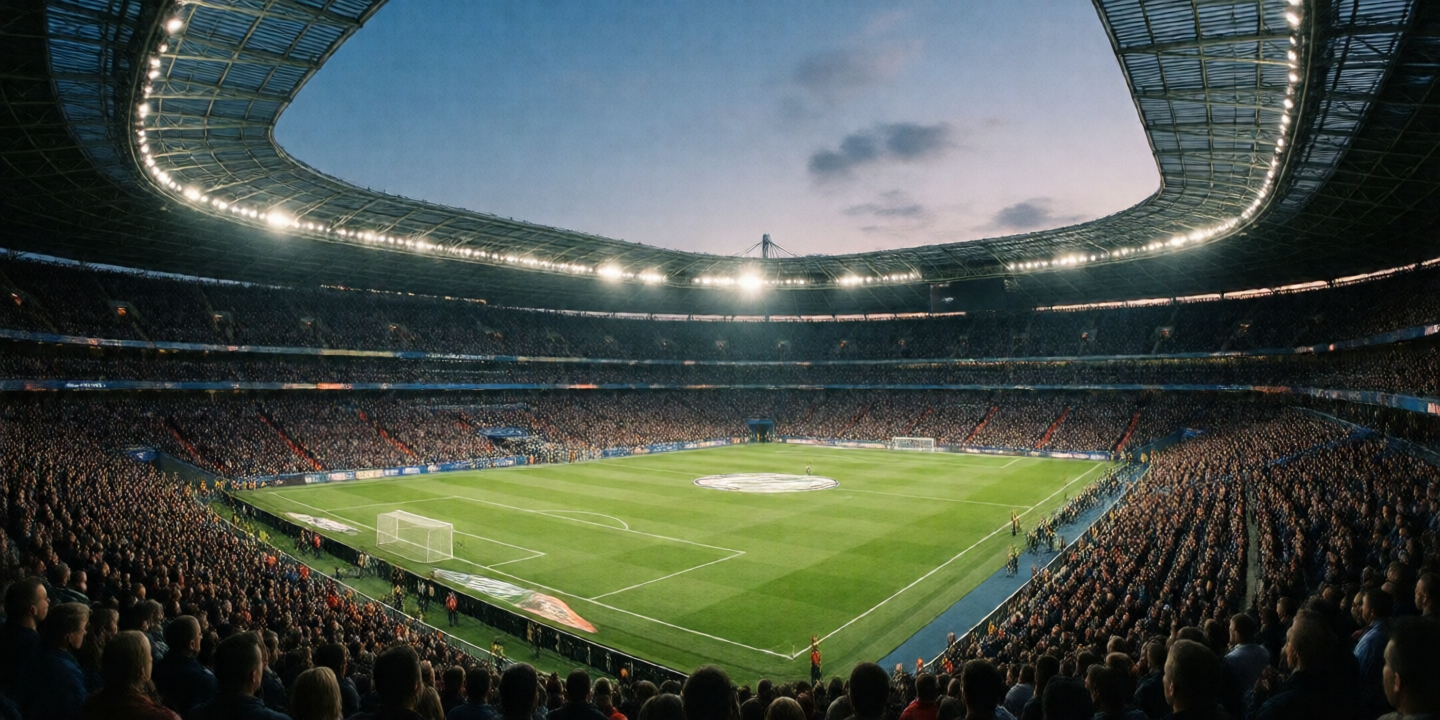
Why Kansas City's 2026 World Cup Role Surprises Fans
Kansas City hosted six matches at Kansas City Stadium during the 2026 FIFA World Cup, the first 48-team tournament, which ran 104 matches across 16 host cities in the United States, Canada and Mexico....
Why Kansas City's 2026 World Cup Role Surprises Fans
Kansas City hosted six matches at Kansas City Stadium during the 2026 FIFA World Cup, the first 48-team tournament, which ran 104 matches across 16 host cities in the United States, Canada and Mexico. The region, branded the Soccer Capital of America, also ran a FIFA Fan Festival that drew hundreds of thousands of supporters, plus motorcoach bus links between Kansas City International Airport, the stadium and regional destinations. Most fan myths fail on arithmetic: eight of the twelve third-placed teams advanced, so a group-stage exit was never as likely as headlines claimed, and the added Round of 32 stretched finalists to eight matches instead of seven. Tactical Review treats those structural numbers as the baseline for every prediction. If you are reviewing the tournament or planning for 2030, start with format math and logistics, then layer opinions on top.

The tournament is over and the hot takes are still piling up, so here is the plan. First, we pin down what Kansas City actually was. Then we run three popular myths through the numbers, because I track turnover and net position for a living and feelings do not reconcile to a spreadsheet, sorry. Finally, we sort what is worth keeping from what belongs in the bin. Fair warning, a few of your favorite certainties will not survive this, and honestly that is a service to you. Tactical Review runs on the same discipline, so expect numbers first and mood second, with the occasional eye-roll aimed at anyone who still thinks "momentum" is a statistic.
Where does Kansas City fit in the 2026 World Cup?
Kansas City was one of 16 host cities for the 2026 FIFA World Cup, staging six matches at Kansas City Stadium, including a quarterfinal on July 11. It also hosted a FIFA Fan Festival and ran motorcoach shuttles linking the airport, stadium and fan zone, making it a full-tournament destination rather than a stadium stop.
The 2026 FIFA World Cup is the first to use 12 groups of four, and 72 of the 104 matches, about 69 percent, were group games. That is the context for Kansas City's role. The host committee at Kansas City FWC26 frames the region as a place "where progress meets promise," and the practical pieces were concrete: reservable motorcoach passes between Kansas City International Airport and the stadium on match days, and separate regional routes to the Fan Festival. Three things made the city's role different from a typical stadium town:
- A stadium with match-day bus service, so fans were not left to improvise their own transport.
- A FIFA Fan Festival that welcomed hundreds of thousands of visitors, including people without tickets.
- A regional footprint across two states, which spread demand beyond one downtown.
For analysts, that matters because venue logistics shape squad travel and rest days. See our host city travel and fatigue breakdown for how we weigh that.
Myth 1: Kansas City Was Just a Match-Day Stop — Debunked
The claim goes like this: a host city only matters for the ninety minutes inside the stadium. It sounds tidy, and it is wrong on the evidence, which the Kansas City organizers published themselves. The FIFA Fan Festival was described as a place that "brought together hundreds of thousands of fans to cheer for their nations, share their cultures, and celebrate the beautiful game." You can quibble with the marketing voice, but the scale is the point. A fan zone that large moves more people through a city than the six matches do on their own, and it did so on days with no football at the stadium at all.
Here is the part most recaps skip. The airport-to-stadium and regional motorcoach structure meant demand was managed by reserved passes rather than pure improvisation. If you are the type who tracks costs per match attended, and I am, that changes your budget model. A fan who skipped the rental car and the parking lottery cut the largest unpredictable line item in the trip. So the myth fails twice: the city mattered beyond kickoff, and the cheapest decision a visitor made was transport, not tickets. Roast yourself accordingly if you budgeted the other way around.

Myth 2: A 48-Team Field Made the Group Stage Pointless — Partially True
Skeptics said that expanding from 32 to 48 teams would bury the group stage in mismatches and dead rubbers. Partially true, and the numbers show where. Under the old format, 16 of 32 teams went home after the groups, which is 50 percent. Under the 2026 format, 32 of 48 advanced, so only 16 teams, or one third, were eliminated. That is a softer filter, and it means a team can lose a match and still survive. In that narrow sense, yes, early games carried less jeopardy than in 2022.
However, the cost of that softness landed on matchday three, and this is the practitioner-level detail worth keeping. With eight of twelve third-placed sides advancing, the ranking among third-placed teams is decided by points, then goal difference, then goals scored. That turns late goals in unrelated groups into currency. A side already beaten 3-0 had a reason to chase one consolation goal, because goals scored can break a tie. So the stakes did not disappear, they migrated. If you only watched the headline scores you missed it. Our third-place qualification explained walks through the tiebreaker order step by step.
Myth 3: Finishing Third Meant You Were Basically Out — Flat-Out False
This one needs no nuance. Eight of the twelve third-placed teams advanced to the Round of 32, which means a third-place finish carried a two-in-three survival rate on structure alone. Yet a lot of fans, and plenty of commentators, kept narrating third place as a near-elimination. If you took that as gospel when you sized a pre-tournament position, the arithmetic says you were pricing the wrong risk.
There is a second, quieter consequence. The extra knockout round means a finalist played eight matches rather than seven: three group games, then the Round of 32, Round of 16, quarterfinal, semifinal and final. That is a 14 percent increase in matches, compressed into the same summer window, and squad depth became a tactical variable rather than a luxury. I tell my friends the same thing every cycle: a team's best eleven is a marketing slogan, while the rotation pattern is the data. Kansas City's quarterfinal sat near the sharp end of that fatigue curve, so the squads who arrived there had already absorbed four matches. Our squad rotation and minutes-played tracker logs this for every nation.

What actually works?
What works is boring: build every opinion on format math, travel load and a written stake limit. Check how many matches a team can play, how many third-placed sides advance, and how far the venue sits from the squad base. Then size any wager as a fixed small percentage of bankroll.
The reason this beats instinct is that every input is checkable. Format math came from the published structure at FIFA, travel load from venue and bus logistics like those Kansas City organized, and rotation from minutes played. A short checklist keeps you honest:
- Count the maximum matches the team can play and compare it with its squad depth.
- Check whether a third-place finish still advances and what the tiebreakers reward.
- Note where the venue sits relative to the team base, and how many rest days separate matches.
- Write the stake before you look at the odds, never after.
Do that for ten matches and you will have a record you can audit, which is more than most tipsters can say. Gambling carries real risk, so only stake what you can afford to lose, and check that betting is legal where you live. Our bankroll tracking template for tournaments is a plain spreadsheet, no magic included.
What to ignore?
Ignore single-match narratives, tournament-wide "curses", and any prediction that cannot name its inputs. Also skip hype about crowd size as a result driver: attendance figures describe the venue, not the scoreline. If a tip gives no format, fatigue or lineup reasoning, treat it as noise.
I know, I know, the curse stories are fun, and you will keep reading them anyway. Still, here is the shortlist of things that cost people money and clarity in 2026:
- "Momentum" claims without a minutes-played or goal-difference number behind them.
- Fan Festival atmosphere used as proof of home advantage; a festival is a party, not a tactic.
- Pre-match "locks" that ignore the rotation risk created by the extra knockout round.
- Anyone quoting a single sample as a trend.
Be nice to yourself and unfollow two accounts this week. Your net position will thank you, and so will your sleep schedule.
How do you follow the tournament day to day?
Follow it in three passes: first read the lineup and travel notes, then compare the market with your own format-based estimate, and finally log the result. Ten minutes a day beats three hours before kickoff, and a simple spreadsheet of stakes and returns keeps your net position honest.
First, the lineup pass. Starting elevens and bench depth tell you more than any preview column, and rotation is the single largest hidden variable in a 104-match schedule. Then, the estimate pass: write down your own number before you open a market, so you are not just agreeing with whatever the screen shows. Finally, the log pass, which almost nobody does, and which is exactly why almost nobody improves. Record the stake, the price, the result and one sentence on why you were wrong or right. After 20 entries you will see patterns that no pundit will ever hand you, including whether you are quietly overbacking your favorite nation. For the rest of the cycle, our daily match preview archive gives you a fresh set of inputs.
What does Tactical Review track?
Tactical Review is a FIFA World Cup content site covering match predictions, team tactics, player stats and tournament coverage, with daily insights for fans. Its approach is numbers first: format rules, minutes played and travel load come before any hot take, and every prediction should show its working.
That is why this piece started in Kansas City rather than with a bold pick. A host city's logistics, from reserved motorcoach passes to a Fan Festival that welcomed hundreds of thousands, shape how squads and supporters actually experience a tournament. They also decide how much of the schedule you can sensibly model. In short, we would rather give you a method you can reuse in 2030 than a list of scores you will forget by Tuesday. If you want the cynical version of the conclusion, it is this: the crowd is loud, the format is arithmetic, and only one of those pays attention to your bankroll. Stay curious, stay skeptical, and keep your stakes small.

Frequently Asked Questions
Q: What is the FIFA Fan Festival in Kansas City?
A: It is the official public fan zone that Kansas City ran during the 2026 FIFA World Cup. According to the host committee, it brought together hundreds of thousands of fans to cheer for their nations, share their cultures and enjoy food and entertainment. You did not need a match ticket to attend, which made it the broadest entry point to the tournament in the region.
Q: How did fans get to Kansas City Stadium?
A: Motorcoach bus services connected the key points. Passes could be reserved in advance for rides between Kansas City International Airport and the city, to Kansas City Stadium on match days, and to regional destinations and the FIFA Fan Festival. Reserving ahead removed the biggest unknown in a trip, which was parking and ride-share pricing around kickoff.
Q: How many teams advanced from the 2026 World Cup groups?
A: Thirty-two of the 48 teams advanced to the Round of 32. That meant the 12 group winners, the 12 runners-up and the eight best third-placed teams. Only 16 teams, about one third, were eliminated after the group stage, compared with half of the field under the old 32-team format.
Q: What is the difference between the 2026 format and the 2022 format?
A: The 2026 tournament added 16 teams and a Round of 32, growing the schedule from 64 to 104 matches. Finalists play eight matches instead of seven, and third place can still qualify. Group games also carry more tiebreaker weight, because goal difference and goals scored decide which third-placed teams go through.
Q: Why do predictions based on star players often fail?
A: They ignore rotation and fatigue, which are bigger variables in a 104-match tournament. With an extra knockout round, managers rest key players in dead rubbers, and a team that qualifies early may field a changed lineup. Check confirmed lineups and minutes played before trusting any preview built around one name.
Q: How much should you stake on World Cup matches?
A: Use a small fixed percentage of your bankroll, commonly one to two percent per position, and set it before you see the odds. Betting is risky and never guaranteed, so only use money you can afford to lose and confirm that it is legal where you live. Log every stake so you can review results honestly.
Q: Where can I find tactical coverage of the tournament?
A: Tactical Review publishes match predictions, team tactics, player stats and tournament coverage, with daily insights for fans following the 2026 World Cup. Each piece starts from format rules and verifiable numbers. You can browse the full tournament coverage hub to see recaps and tactical breakdowns in one place.